How can executive travel be planned to minimize risk without disrupting performance or visibility? Why does executive travel require a different safety mindset than traditional business or leisure trips? What proactive strategies make executive travel safer, calmer, and more controlled from start to finish?
Executive travel comes with a unique risk profile that goes far beyond standard travel advice. This article explains why executives, public figures, and high-profile professionals must approach executive travel with precision, preparation, and discretion. Drawing from real-world experience in executive travel protection, it outlines how detailed planning, vetted logistics, situational awareness, and operational discretion help leaders stay secure while maintaining professionalism and momentum.
Rather than promoting fear or paranoia, the piece reframes executive travel safety as a strategic advantage. Readers learn how blending in, working with trusted professionals, protecting sensitive information, and cultivating a calm, observant mindset can dramatically reduce exposure to threats. The result is executive travel that is not only safer, but smoother, quieter, and more effective—allowing leaders to focus on results instead of reacting to preventable disruptions.
Most travel safety advice sounds like it was written for tourists. “Don’t lose your passport. Keep an eye on your bag. Don’t walk alone at night.”
Those rules are fine for vacationers, but when you’re traveling as an executive or public figure with a higher profile, demanding schedules, public visibility, and business objectives riding on every move you make, the risk landscape looks very different.
You’re moving through airports, hotels, and meetings with people who know your name, your brand, and sometimes your net worth. You may be accompanied by staff, security, or assistants, but your pace and exposure make you inherently more vulnerable to disruptions, reputational harm, and even targeted threats.
Executive travel safety isn’t about paranoia. It’s a game of precision and planning.
You’re managing risk while maintaining professionalism, discretion, and performance. Your security plan has to fit into your business plan, quietly, seamlessly, and without drawing attention.
From my years in executive travel protection and security services, I’ve learned that preparation is what separates a calm, controlled trip from a chaotic one. Whether you’re traveling solo, with a team, or as part of a high-profile organization, your safety begins long before the flight leaves the ground.
The goal isn’t just to arrive safely and securely; it’s also to arrive in a timely manner. Here’s how to make that happen.
Plan Like You’re Allergic to Surprises
In my line of work, surprises are red flags. When I show up for a job, from start to finish, I don’t want to be surprised by anything.
A last-minute change, an unknown driver, a misplaced itinerary; these are small cracks that can become major vulnerabilities in a client’s protection detail.
Executives thrive on preparation in every other aspect of business, and that includes how they travel.
Before boarding a plane, your logistics should be airtight:
- You should have a thorough itinerary with built-out travel routes, hotel check-ins, meetings, and contingency plans.
- Know your vehicles, your drivers, and your alternate options for every means of transportation.
- Select hotels not just for comfort, but for layout and security. Look for multiple exits, emergency routes, and reliable on-site security personnel.
If you have an assistant or security detail, empower them to plan in layers. That means always thinking three steps ahead. Have alternative hotels in case of closures, multiple transportation methods, and emergency contacts wherever you’re traveling.
I’ve seen companies invest heavily in flights and meetings, but not enough in logistics. Then, when something as simple as a canceled route or a protest breaks out, operations crumble because there were never any backup plans.
A few best practices that can go a long way:
- Vet your hotel: Learn the layout, the exits, and the surrounding area. Request rooms on higher floors but below the top, that way they’re high enough to deter break-ins, but low enough for emergency evacuation.
- Plan for redundancy: If one driver or route falls through, have another ready.
- Digitize your itinerary: Be careful with this, though. Use secure, private apps for coordination and avoid sharing sensitive details, such as flight numbers and hotel names, via open email or text.
Executives are targeted because their schedules are predictable. Your job is to stay organized without becoming exposed.
When everything that can be controlled is controlled, you can focus fully on the purpose of the trip.
Blend in Without Losing Professional Presence
One of the simplest ways to stay safe abroad is also the one most people resist: blending in.
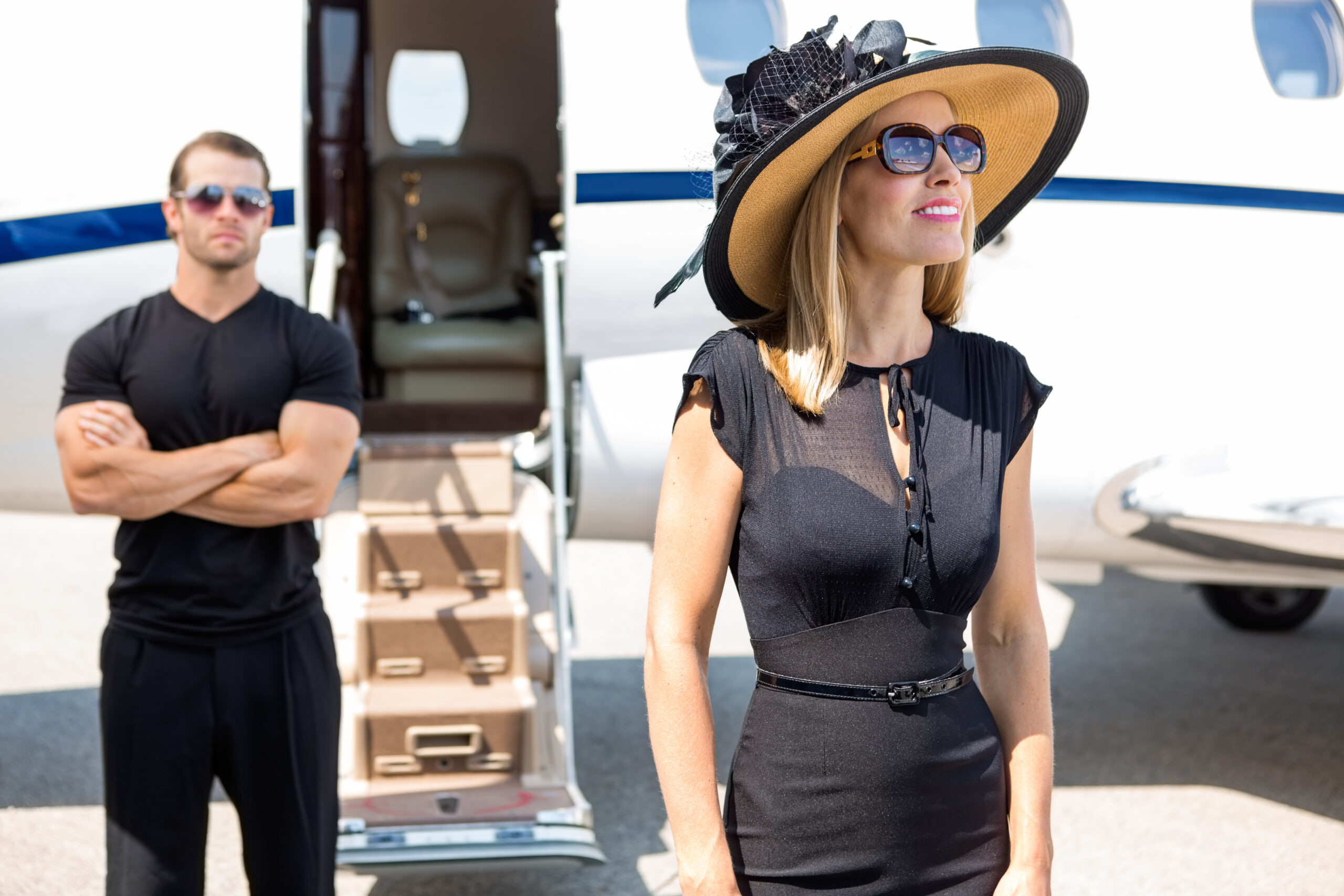
I’ve worked on executive travel details where I’ve seen executives unintentionally draw attention the moment they land. They’re wearing luxury watches, using designer luggage and branded briefcases, and they’re surrounded by entourages that look like they walked out of a magazine spread. To them, it’s normal. To bad actors, it’s a dangerous signal that says they’re a valuable target.
Blending in doesn’t mean dressing down or giving up your style or appearance. It means knowing the difference between looking professional and looking expensive.
Neutral colors, discreet accessories, and classic silhouettes travel better than anything flashy. A dark suit or business-casual attire paired with understated luggage communicates confidence and sophistication without literally advertising wealth.
The same applies to those of us working security on an executive travel detail. If you’re representing a high-profile brand, the last thing you want is to make yourself the story. That applies as much in airports and hotels as it does in public venues, or even just walking down the street.
The principle I use is simple: You want to be memorable for your professionalism, not your appearance.
Here’s what blending in looks like in practice:
- Choose quality over brand visibility. Leave the luxury logos at home.
- Keep luggage and technology streamlined. Avoid bags that scream “executive” or have identifying emblems or information on them.
- Observe local fashion cues. Dress appropriately for cultural norms and climates. You’ll stick out immediately if it looks like you’re not dressed for the region.
- Be discreet when using high-value items, such as phones or laptops, in public spaces.
In the world of executive travel protection, blending in is the ultimate strategy. It allows you to move freely, attract less attention, and reduce the chances of being profiled or identified.
Professional doesn’t have to mean conspicuous. The quiet confidence of someone who moves with purpose, not flash, is far more powerful than any designer label.
Only Work with Trusted and Verified Professionals
When traveling internationally, who you trust is everything.
Every country operates differently—and even the most experienced travelers underestimate how much local knowledge matters. A vetted local contact can make your trip seamless; an unverified one can compromise it.
I’ve seen executives rely on unverified ride-share drivers and impromptu local guides, and they end up in situations that range from uncomfortable or annoying to genuinely dangerous.
Your executive travel network should always include:
- Vetted drivers from reputable agencies or private security providers.
- Pre-approved hotels known for discretion and reliability.
- Local partners or hosts who have been background-checked and referred by trusted sources.
Work only with vendors and transport services that your company or team can verify through professional channels. If you don’t have a security team, research through embassies, business networks, or your corporate travel manager.
And one of the most important things to remember for any executive travel security plan is to avoid making last-minute arrangements. They may be convenient, but they’re rarely controlled.
Anyone handling your transportation, lodging, or coming in contact with you in any meaningful way should be vetted and trusted by your entire staff.
Because remember this: in executive travel protection, discretion is just as important as competence. The wrong person with the right access can create more problems for your client than any external threat.
Move in Silence: The Power of Operational Discretion
In an age where people share every movement online, discretion has become a lost art, and in the world of high-level executive travel, that’s a major liability.
I can’t emphasize this enough: what you post is what you expose.
For executives and high-profile travelers, oversharing can create an opportunity for the wrong kind of attention from stalkers, protesters, competitors, and other bad actors.
Operational discretion means keeping your movements quiet, controlled, and on a need-to-know basis.
Here are some of my essential tips for keeping a low profile and moving in silence:
- Limit social media sharing: Post after the trip, not during it.
- Communicate travel details internally: Make sure only your team, assistant, or protective staff have access to your real-time location.
- Keep itineraries private: Don’t discuss flight numbers, hotel names, or dinner plans in public areas.
- Encrypt communications when discussing travel logistics digitally.
I’ve worked with clients who had no idea how easily others could track them based on open-source data until they saw it happen. Something as harmless as a geotagged photo or tagged location on social media can create a breadcrumb trail that people can easily follow directly to you.
The fewer people who know where you’ll be and when, the more freedom you have to move securely and confidently.
Master Your Mindset: Calm Awareness Over Paranoia
You can have the best logistics, the right team, and flawless systems—but if your mindset isn’t right, you’re still at risk.
The best protectors and travelers I’ve met share one key trait: calm awareness.
They don’t panic. They don’t act suspicious of everyone. They’re just observant, study their surroundings, and stay mentally engaged.
It’s easy to cross the line between awareness and paranoia. The difference is in your composure.
When you’re anxious, you miss details. When you’re calm, you notice everything.
In practice, mastering your mindset and operating from a place of calm composure looks like this:
- Stay off autopilot: When walking through airports, lobbies, or crowds, make eye contact, stay off your phone, and notice any exits.
- Trust your intuition: If something feels off, it probably is. Change routes, switch vehicles, or delay movements when necessary.
- Control your pace: Don’t rush. Plan enough margin to move calmly and make adjustments as needed. When you rush, you’re setting yourself up to make mistakes.
- Practice observation: Pick up on people’s energy, movement, and proximity quietly, without staring or making assumptions.
In executive travel protection, we call this “situational awareness,” but it applies to anyone who travels.
When you develop a calm, observant mindset, you operate differently. You’re alert, but not anxious. Prepared, but not paranoid.
It’s the same discipline that makes great leaders great under pressure. You have to be totally in control.
The Peace of Preparation
At the end of the day, executive travel safety isn’t about fear; it’s about foresight, and that comes from preparation.
Every detail you prepare in advance, from the hotel layout to the driver’s credentials, buys you back peace of mind on the road. That peace allows you to lead better, think clearly, and stay focused on why you’re traveling in the first place.
In the Marine Corps, we were taught to plan for the worst so we could perform at our best. The same principle applies each time I work a security detail.
It’s not the loudest, toughest, or most visible travelers who are the safest. It’s the ones who prepare quietly, move deliberately, and never mistake comfort for control.
You need to be prepared and consistent in order to build confidence in your travel plans and abilities.
Conclusion
Most “travel safety” advice is reactive, telling you what to do after something happens. True executive travel safety is proactive. It’s what you do before something can go wrong, so there’s no chance of a mishap in the first place.
When I work with clients across industries, including entertainment, corporate, and political spaces, I remind them that safety and service go hand in hand. You can’t perform at your best if you’re distracted by uncertainty, and you eliminate uncertainty with proper planning.
You don’t have to think like a bodyguard to travel safely. You just have to think like a professional who values control, composure, and consistency.
Every trip you take sends a message, not just about where you’re going, but about how you operate when the environment changes.
The best travelers move quietly, confidently, and with purpose. They’re not reactive, but they’re always ready.